How to Build a Content Brief for SEO and AI Search
A practical framework for turning audience questions, reliable evidence and search intent into a content brief writers can actually use.
On this page
- A content brief is a decision system
- Step 1: Define the reader’s decision
- Connect the reader decision to a business outcome
- Step 2: Map intent as questions, not just keywords
- Step 3: Build an evidence map before the outline
- Step 4: Design the answer architecture
- Specify the answer format where it matters
- Step 5: Keep technical discovery boring and complete
- Step 6: Add AI-search questions without writing for a robot
- Can the central answer stand on its own?
- Are entities and relationships unambiguous?
- Does the page add evidence or experience worth citing?
- Step 7: Make the review loop part of the brief
- A reusable content brief structure
- The final test
In brief
What to take from this article
- A useful brief defines the reader’s decision and the business outcome before it defines headings or keywords.
- Evidence should be mapped to specific claims so writers know what requires a source, an example or first-hand expertise.
- Clear answer architecture helps people scan and understand a page; it also makes the page easier for search systems to interpret.
- AI search adds new discovery contexts, but it does not replace the foundations of useful, trustworthy and technically accessible content.
A content brief should reduce ambiguity. It should help a writer understand who needs the page, what that person is trying to decide, which evidence will make the answer credible and what the business needs the page to accomplish.
That sounds obvious, yet many briefs still begin with a keyword, a word-count target and a list of headings copied from competing pages. The writer receives a shape, but not a reason for that shape. The result may be technically tidy and still fail to say anything worth remembering.
The growing influence of AI-assisted discovery makes this weakness more visible. Search journeys can now move through traditional results, summaries, assistants, communities and product interfaces before a person reaches a website. A strong brief must prepare content to survive that fragmented journey without turning the writing into a machine-facing checklist.
This framework keeps the focus on the reader while giving SEO and AI search the structure they need.
A content brief is a decision system
The first job of a brief is not to describe a document. It is to align the decisions behind the document.
A writer should be able to open the brief and answer five connected questions: Who is this for? What are they trying to understand, compare or do? Why should they trust this answer? What makes this page different from the information already available? What useful next step should become clearer after reading?
If those answers are missing, more keywords will not rescue the brief. The team will make the important decisions during drafting, during review or, worst of all, after publication.
Google’s guidance on people-first content asks whether a page serves an existing audience, demonstrates real knowledge and leaves the reader feeling that they learned enough to achieve their goal. Those are editorial questions before they are optimization questions.
Step 1: Define the reader’s decision
“People searching for content briefs” is not a useful audience definition. It describes an action, not a situation.
A more useful description might be:
A content lead at a growing SaaS company needs to give freelance writers enough strategic context to produce consistent articles without turning every draft into a full rewrite.
That sentence gives the brief a working environment. It suggests constraints, anxieties and a standard of usefulness.
A useful reader decision names the person, the task and the evidence that will remove uncertainty. For this article, that statement is:
After reading, a content lead should be able to create a practical SEO and AI-search brief because they understand how audience intent, evidence, structure and review fit together.
This becomes the filter for every proposed section. If a heading does not support that decision, it does not belong in the outline simply because another ranking page includes it.
Connect the reader decision to a business outcome
The business outcome should be specific enough to guide the content without forcing a conversion into every paragraph.
Useful outcomes might be helping a qualified reader judge whether a service fits, reducing repeated questions before a sales or onboarding conversation, earning trust around a topic the business can genuinely support or giving customers and internal teams a reference they can return to.
“Rank first” is not a content outcome. It is an uncertain distribution result. The brief should state what the page must do when the right person reaches it.
Step 2: Map intent as questions, not just keywords
A primary query is still useful. It gives the team a shared description of the topic and helps identify the language people use. But a brief becomes much more actionable when it maps the questions behind that query.
For a content brief article, the question map should cover what belongs in the brief, how much direction helps a writer, where search requirements fit, which claims need evidence and how the team will know whether the brief improved the final article.
Group these questions by the job they perform:
| Question type | Reader need | Editorial response |
|---|---|---|
| Definition | Understand the object | Explain what the brief is and is not |
| Process | Complete the work | Give an ordered, usable method |
| Evaluation | Judge quality | Provide criteria and review questions |
| Risk | Avoid a mistake | Name failure modes and trade-offs |
| Next step | Act with confidence | Offer a template, checklist or relevant path |
This question map is more durable than a list of near-identical keyword variations. It can also support discovery across different interfaces because the content answers complete needs rather than repeating isolated phrases.
Step 3: Build an evidence map before the outline
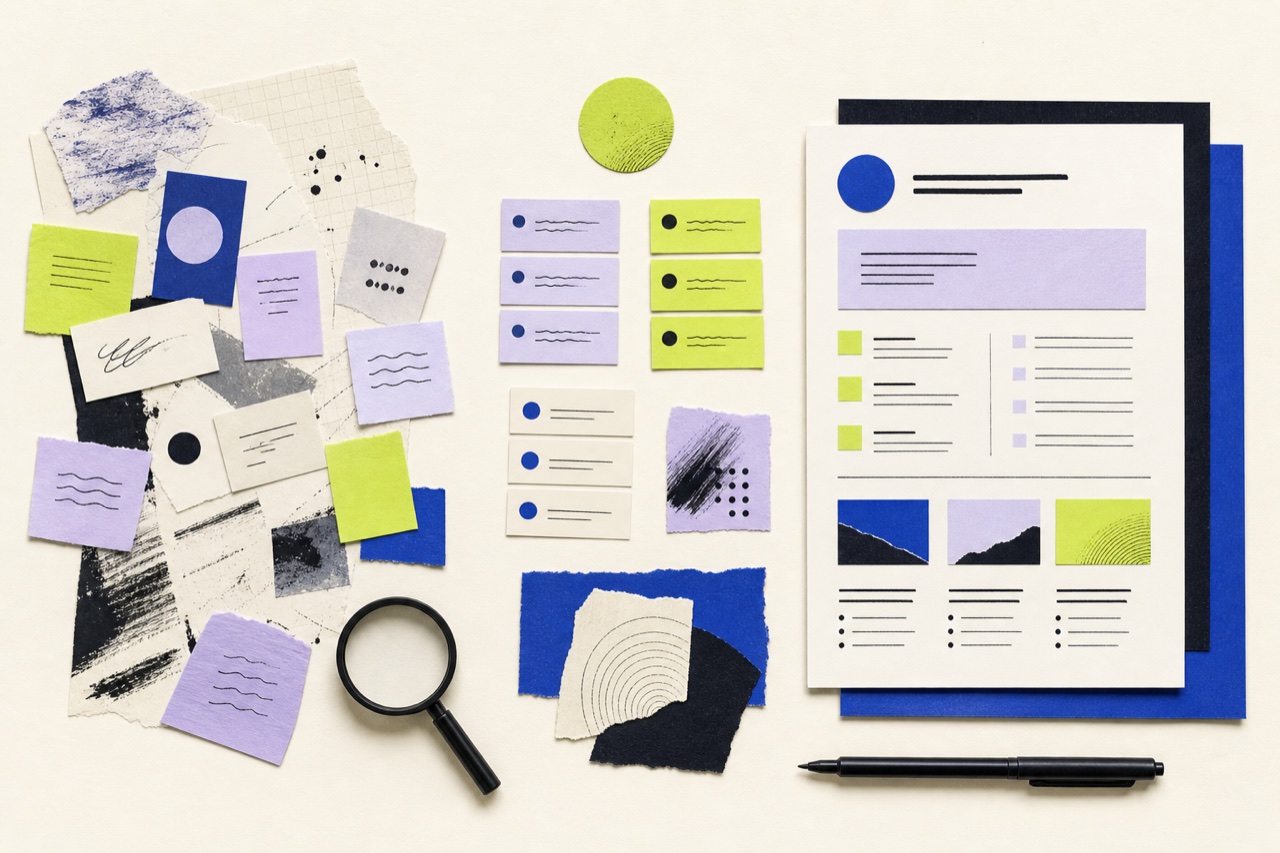
Every important claim creates an evidence obligation. A brief should make that obligation visible before the writer starts.
Create a small evidence table with four columns:
| Planned claim | Best evidence | Source owner | Status |
|---|---|---|---|
| People-first value should guide optimization | Current search documentation | External authority | Verified |
| The existing briefing process causes repeated rewrites | Editorial review notes | Internal team | Needs example |
| The proposed template improves consistency | Before-and-after workflow evidence | Content lead | Measure after rollout |
The best evidence may be first-hand experience, product or performance data, a subject-matter interview, an original example, current official documentation or a reputable study that directly supports the claim.
Not every sentence needs a citation. But every consequential claim should have a reason to be believed.
An evidence map also prevents a common review problem: a stakeholder asks for “more authority,” and the writer adds links that are adjacent to the topic but do not support the specific statement. Sources should do a clear job.
Step 4: Design the answer architecture
Only after the reader decision, question map and evidence map are clear should the brief become an outline.
The outline should reveal the logic of the answer: establish the situation, answer the central question, explain the method in a useful order, support difficult claims, address meaningful objections and finish with a way to apply the answer.
Headings should describe the section’s job. “Step 3: Build an evidence map before the outline” is more useful than “Evidence” because it communicates both action and sequence.
The W3C page-structure guidance recommends meaningful headings and semantic regions so people can navigate and understand content. That principle serves readers using assistive technology, readers scanning on a phone and editors reviewing a long draft. Clear structure is not an SEO decoration; it is part of making information usable.
Specify the answer format where it matters
Some sections need more than a heading. The brief can request a short definition for a direct question, a comparison table for repeated criteria, a numbered process when sequence matters, a worked example when abstraction creates uncertainty or a checklist when the reader needs to validate completed work.
Do not convert every section into a list for the sake of scannability. The page still needs rhythm, explanation and a human point of view.
Step 5: Keep technical discovery boring and complete
Strong editorial thinking cannot compensate for a page that search systems cannot access or understand.
The brief should include a compact technical handoff covering the proposed title and description, stable URL and canonical target, internal links, media requirements with alternative text, author and publication information, appropriate structured data and any indexation or redirect notes.
Keep that handoff short enough that the writer can see which responsibilities belong to editorial, design and development.
Google’s AI features guidance is deliberately unglamorous: pages still need to be indexed, eligible to appear with a snippet and supported by the same technical foundations used in search. There is no special file or secret block of AI-facing copy that replaces those fundamentals.
Step 6: Add AI-search questions without writing for a robot
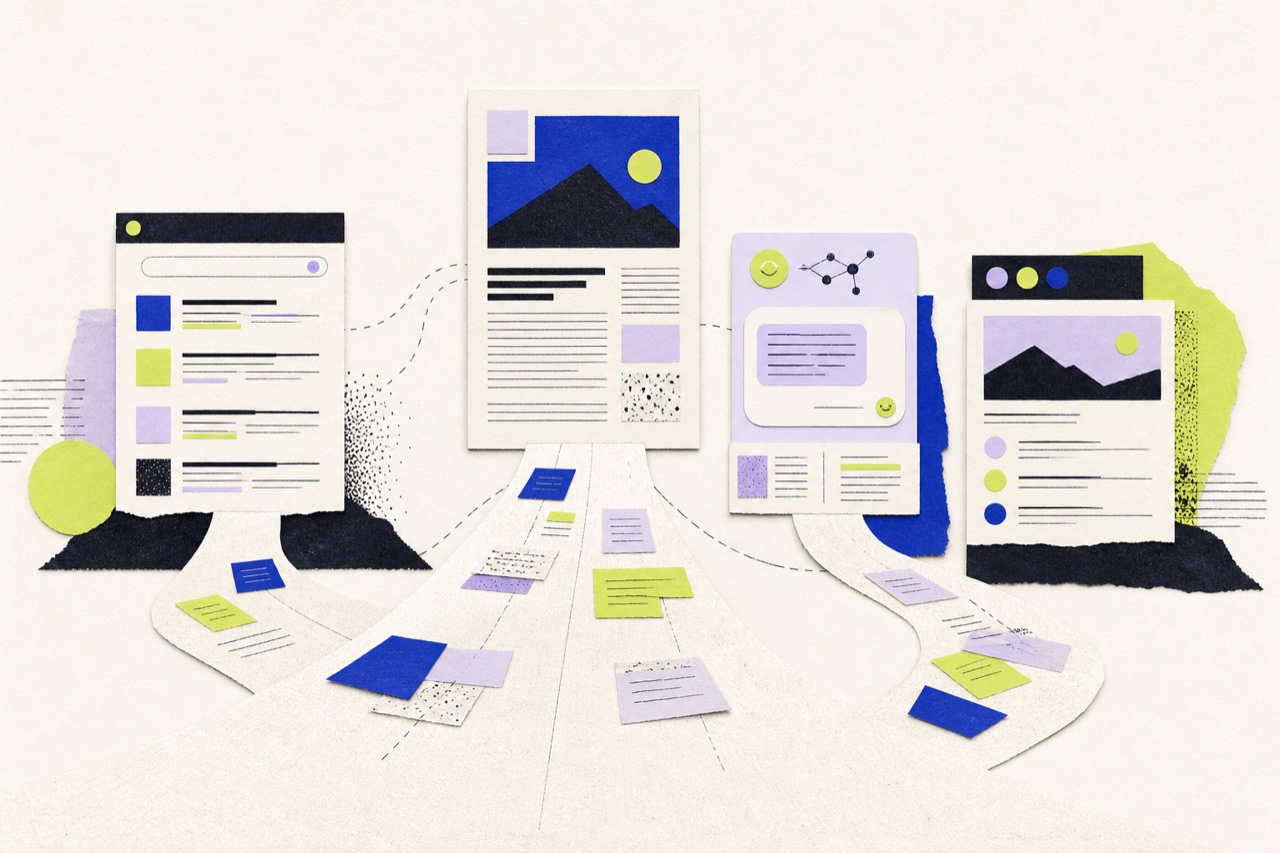
AI-assisted discovery changes where and how a useful passage may be encountered. It does not change the need for accuracy, clarity or original value.
Add three checks to the brief:
Can the central answer stand on its own?
The page should contain concise passages that answer important questions without requiring five paragraphs of setup. Concise does not mean shallow. It means the reader can identify the answer before exploring the nuance.
Are entities and relationships unambiguous?
Use specific names for products, methods, organizations and concepts. Explain how they relate. Pronouns and clever shorthand should not make the subject difficult to follow.
Does the page add evidence or experience worth citing?
Commodity summaries are easy to reproduce and hard to trust. A useful article should add something grounded: a framework, a tested process, a strong example, a documented result or a perspective shaped by direct work.
Microsoft’s introduction to AI Performance in Bing Webmaster Tools reinforces a practical point: AI visibility can be observed through citations and grounding activity, but a citation alone is not a promise of authority or ranking. The goal of the brief should remain a high-quality answer, not a guaranteed appearance in a generated response.
Step 7: Make the review loop part of the brief
A brief is not finished when the outline is approved. It should define how the draft will be evaluated and what the team will learn after publication.
Review should map back to the original decisions. Check whether the opening makes the reader’s situation recognizable, the central answer is clear, major claims have the right evidence, headings reveal the argument, the article adds something beyond synthesis and the next step fits the reader’s situation. Then confirm that the title, description, links and structured data match the visible page.
After publication, separate diagnostic signals from business outcomes.
Diagnostic signals may include impressions, queries, citations, reading depth and internal-link use. Business outcomes may include qualified enquiries, assisted conversions, sales enablement or fewer repeated support questions. One set helps explain distribution and behaviour; the other shows whether the page created value.
A reusable content brief structure
The final brief does not need to be long. It needs to make the important decisions difficult to miss.
| Brief layer | Decisions to record |
|---|---|
| Purpose | Working title, premise and business outcome |
| Audience | Primary reader, situation and reader decision |
| Substance | Supporting questions, point of view, evidence map and answer architecture |
| Delivery | Format requirements, internal links, technical handoff, review criteria and learning plan |
A strong brief gives the writer freedom inside clear boundaries. It removes avoidable uncertainty while leaving room for judgement, voice and better ideas discovered during the work.
The final test
Before handing the brief to a writer, read it once without looking at the keywords.
Can you tell who the page is for? Can you name the decision it supports? Do you know which claims require proof? Does the outline move in a logical order? Is there a reason this page should exist beyond matching what already ranks?
If the answer is yes, the brief is doing strategic work.
If the answer is no, the next step is not a longer outline. It is a clearer decision.
Further reading